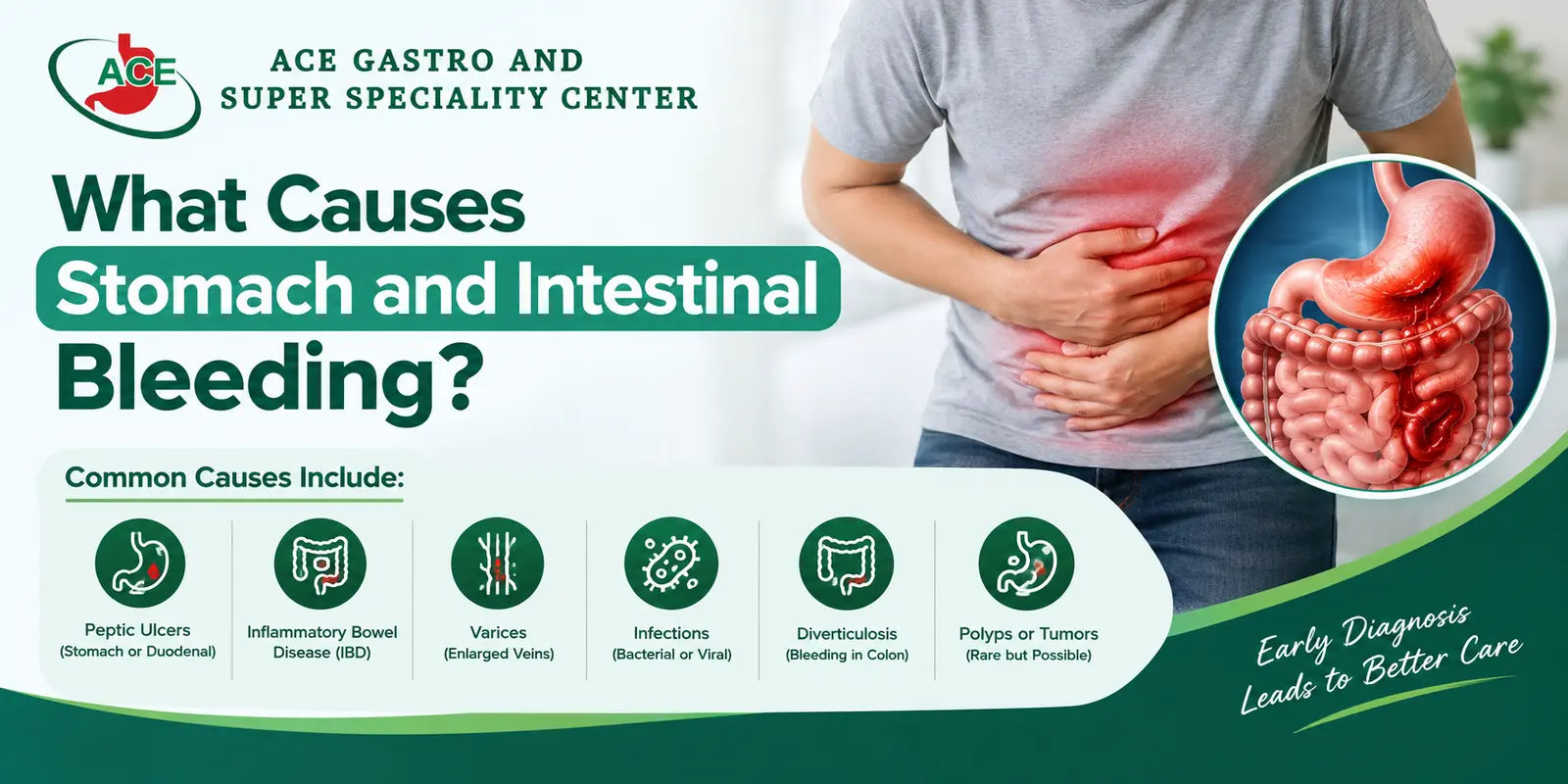
Stomach and intestinal bleeding, also known as gastrointestinal (GI) bleeding, can occur anywhere along the digestive tract. The severity can range from mild blood loss to a serious medical emergency. In some cases, bleeding is visible, such as blood in vomit or stool, while in other cases it may be hidden and discovered through tests for anemia.
Understanding the possible causes of GI bleeding is important because early diagnosis can help identify the underlying condition and guide appropriate treatment. If you notice signs of digestive tract bleeding, consulting a Liver Specialist in Jaipur or gastroenterology specialist can help determine the cause.
What Is Stomach and Intestinal Bleeding?
Gastrointestinal bleeding refers to blood loss from any part of the digestive system, including the esophagus, stomach, small intestine, large intestine, rectum, or anus.
Bleeding from the upper digestive tract may cause vomiting blood or black, tarry stools. Bleeding from the lower digestive tract may appear as bright red or dark blood mixed with stool.
Sometimes, the bleeding is not visible. Slow blood loss over time can lead to iron-deficiency anemia, causing tiredness, weakness, dizziness, or shortness of breath.
What Causes Stomach Bleeding?
Several conditions can cause bleeding in the stomach or upper digestive tract.
1. Peptic Ulcers
Peptic ulcers are open sores that develop in the stomach or duodenum. They can damage blood vessels and cause bleeding. Common causes include H. pylori infection and prolonged use of certain pain-relieving medicines, particularly NSAIDs.
A bleeding ulcer may cause vomiting blood, coffee-ground-like vomit, black stools, weakness, or dizziness and requires prompt medical assessment.
2. Gastritis
Gastritis involves inflammation of the stomach lining. Severe inflammation or erosion can sometimes result in bleeding. It may be associated with certain medicines, alcohol use, infections, or other underlying conditions.
3. Esophageal Varices
People with advanced liver disease and portal hypertension can develop enlarged veins called esophageal varices. These veins may rupture and cause significant upper GI bleeding.
Patients with cirrhosis should remain aware of this potential complication and receive appropriate medical follow-up. A Liver Specialist in Jaipur can evaluate liver disease and monitor for complications when necessary.
4. Gastrointestinal Tumors
Tumors or cancers involving the digestive tract can sometimes cause bleeding. Depending on the location, bleeding may be visible or hidden. Persistent anemia, unexplained weight loss, changes in bowel habits, or blood in the stool should be medically evaluated.
What Causes Intestinal Bleeding?
Bleeding can also originate from the small or large intestine. Possible causes include intestinal inflammation, polyps, diverticular disease, inflammatory bowel disease, infections, hemorrhoids, and colorectal cancer.
The appearance of blood can provide some clues about its location, but it cannot reliably identify the cause on its own. Medical evaluation may be required to determine where the bleeding is coming from.
Can Liver Disease Increase the Risk of GI Bleeding?
Yes. Advanced liver disease can lead to portal hypertension, which increases pressure in the veins connected to the liver. This may contribute to the development of esophageal or gastric varices that can bleed.
Liver cirrhosis can also affect normal blood clotting and platelet levels, potentially making bleeding complications more difficult to manage.
Timely Liver Cirrhosis Treatment in Jaipur focuses on managing the underlying liver disease and reducing the risk of complications. Patients with cirrhosis should follow their specialist's advice regarding monitoring, medicines, lifestyle changes, and screening for complications.
How Is Gastrointestinal Bleeding Diagnosed?
The diagnostic approach depends on the patient's symptoms and suspected source of bleeding. Doctors may perform a physical examination and recommend blood tests to assess anemia and other indicators.
Depending on the situation, investigations may include upper GI endoscopy, colonoscopy, imaging studies, or other specialized tests. Endoscopy can sometimes identify the source of bleeding and allow treatment during the same procedure.
When Is GI Bleeding an Emergency?
Seek urgent medical attention if you experience:
- Vomiting blood or dark coffee-ground-like material
- Black, tarry stools
- Large amounts of blood in the stool
- Fainting or severe dizziness
- Rapid heartbeat or unusual weakness
- Severe abdominal pain
- Symptoms of significant blood loss
Do not wait for symptoms to resolve on their own when significant bleeding is suspected.
How Is the Underlying Cause Treated?
Treatment depends entirely on the source and severity of bleeding. Doctors may use medicines, endoscopic procedures, blood transfusion when medically necessary, or other interventions depending on the patient's condition.
If bleeding is associated with advanced liver disease, managing the underlying condition is also important. Appropriate Liver Cancer Treatment in Jaipur may involve a multidisciplinary approach when liver cancer is identified as the cause or contributing condition.
For patients with liver and digestive disorders, Dr. Sushil Kumar Jain provides gastroenterology consultation and treatment at ACE Gastro Super Speciality Clinic in Jaipur.
FAQs
1. What are the most common causes of stomach bleeding?
Peptic ulcers, gastritis, esophageal varices, and certain tumors or other digestive tract conditions can cause stomach or upper GI bleeding. The exact cause requires appropriate medical evaluation.
2. Can liver cirrhosis cause intestinal bleeding?
Liver cirrhosis can increase the risk of gastrointestinal bleeding, particularly through portal hypertension and the development of esophageal or gastric varices. Specialist monitoring can help manage these risks.
3. Is black stool always a sign of stomach bleeding?
Black, tarry stool can indicate bleeding from the upper digestive tract because blood becomes dark as it passes through the digestive system. However, certain foods and medicines can also darken stool, so suspected bleeding should be medically assessed.
4. When should I consult a Liver Specialist in Jaipur?
If you have known liver disease, cirrhosis, unexplained abnormal liver tests, jaundice, or symptoms suggesting liver-related complications, specialist evaluation may be appropriate. Vomiting blood or black stools requires urgent medical attention.
5. Can GI bleeding be treated?
Yes, many causes of GI bleeding can be treated. Treatment depends on the underlying cause, location, and severity and may include medicines, endoscopic treatment, or other interventions.





Share this page with your family and friends.